Web3 Solutions for Crypto Exchanges: Architecture, Trade-offs, and Integration Patterns
Web3 solutions refer to the infrastructure layer that enables crypto exchanges to interact with blockchain networks directly, manage onchain state, and expose decentralized trading primitives to end users. The choice of web3 stack determines latency, custody model, transaction routing, and the types of orders and instruments an exchange can support. This article examines the key architectural decisions, common integration patterns, and operational risks that exchange builders encounter when deploying web3 components.
Custody and Signing Models
The web3 layer mediates between user intent (place an order, withdraw funds) and blockchain execution. Exchanges adopt one of three signing architectures:
Fully noncustodial: Users sign every transaction with their private keys via browser wallets or hardware devices. The exchange frontend assembles the transaction but never holds signing authority. Uniswap’s interface and similar DEX frontends operate this way. Latency is variable because each action requires user approval, and gas estimation must run clientside or via a public node.
Delegated signing via smart contract wallets: Users deploy a contract wallet that grants limited permissions to an exchange operator key. The contract enforces rules such as withdrawal limits, whitelisted destinations, or time locks. The operator key can sign routine trades without prompting the user, reducing latency while preserving partial custody. This model requires users to deploy and fund a contract, adding onboarding friction.
Full custodial with internal settlement: The exchange controls private keys for user deposit addresses and settles trades in an internal ledger. Blockchain interaction occurs only during deposits and withdrawals. This minimizes onchain transaction costs and enables subsecond order matching, but introduces counterparty risk and regulatory obligations similar to traditional exchanges.
Each model trades off user control, execution speed, and gas efficiency. Hybrid exchanges often support multiple modes, letting users choose between a noncustodial trading experience and a custodial fast lane for high frequency activity.
Node Infrastructure and RPC Routing
Exchanges require reliable access to blockchain state (balances, pending transactions, mempool visibility) and broadcast capability for signed transactions. The web3 solution must route requests to nodes that provide:
State consistency: Read requests for balances or allowances must reflect the same block height across all trading logic. Stale reads can lead to rejected transactions or incorrect margin calculations. Exchanges typically run dedicated archive nodes or use stateful RPC providers that pin sessions to specific nodes.
Mempool visibility: Observing pending transactions before confirmation allows the exchange to detect incoming deposits faster and warn users about frontrunning risks. This requires full nodes with mempool relay enabled, not lightweight or stateless endpoints.
Broadcast redundancy: A failed transaction broadcast can strand user funds or delay urgent operations like liquidations. Production setups broadcast to multiple nodes simultaneously and confirm inclusion by querying independent endpoints.
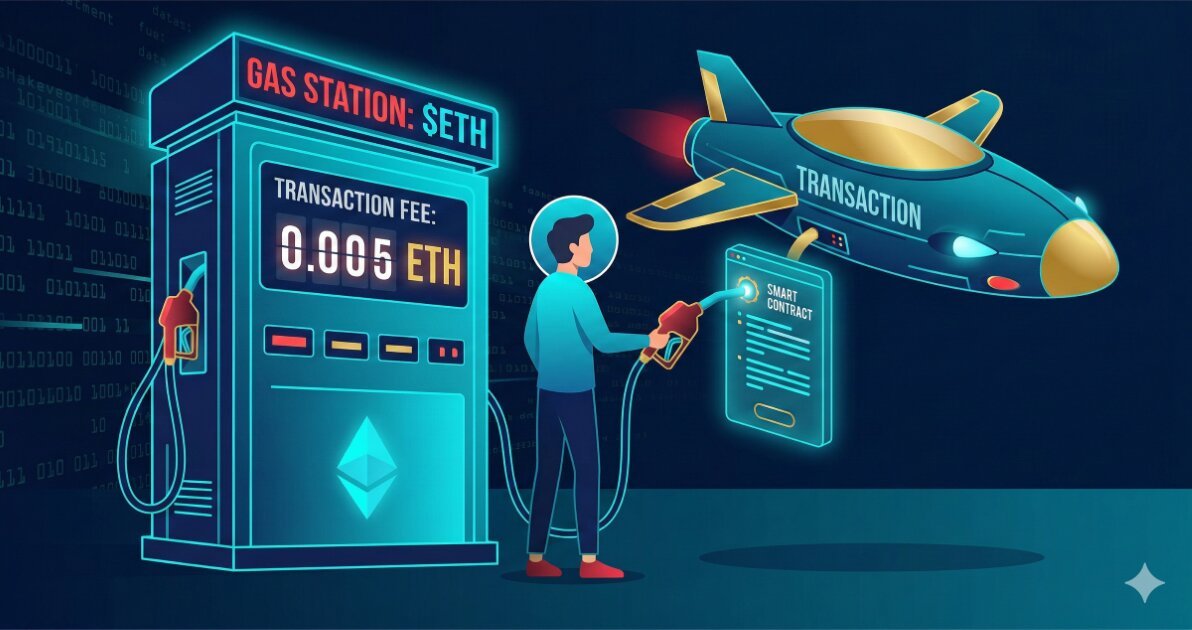
Some exchanges run their own validator or miner nodes to guarantee transaction inclusion and priority. Others use priority fee auctions (EIP-1559 on Ethereum) or MEV relay channels to compete for blockspace during congestion.
Interaction with Decentralized Liquidity
Exchanges that aggregate liquidity from onchain AMMs or order books must integrate web3 calls for price discovery, routing, and execution:
Static calls for quoting: The exchange simulates a swap or trade using eth_call (on EVM chains) to estimate output amounts and check slippage before committing a transaction. This requires the web3 provider to support tracing or simulation endpoints, not just standard JSON-RPC.
Routing across protocols: Aggregators split orders across multiple pools to minimize price impact. The web3 layer must construct multicall transactions, estimate gas for complex paths, and handle partial fills if intermediate steps revert. Tools like 1inch’s Pathfinder or 0x’s API abstract this complexity but introduce dependency on external services.
Event listening for state changes: The exchange subscribes to onchain events (Swap, Transfer, Liquidation) via WebSocket or eth_getLogs to update internal models of liquidity depth and user balances. Missed events due to connection drops or reorgs can desync the exchange state from the blockchain.
Confirm whether your web3 provider supports the full range of calls needed for routing (eth_call with state overrides, debug_traceCall) and check event delivery guarantees during network splits.
Handling Reorgs and Finality
Blockchains reorganize when competing blocks are produced. A reorg can invalidate transactions the exchange has already credited to user accounts. The web3 solution must enforce finality rules:
Confirmation depth: Wait a protocol specific number of blocks before treating a deposit as final. Ethereum typically requires 12 to 32 blocks, depending on risk tolerance. Sidechains and L2s vary widely.
Reorg detection: Monitor for decreases in block height or changes in block hash at a given height. When detected, roll back any internal state updates tied to reverted blocks and reprocess the canonical chain.
Deposit address reuse: If a deposit address is reused after a reorg, two users might send funds to the same address in different chain histories. Exchanges often generate unique deposit addresses per transaction or implement nonce based tagging to disambiguate.
Some exchanges mark deposits as pending for a fixed time window regardless of confirmations, especially on chains with low hashrate or stake weight.
Worked Example: Cross-Protocol Trade Execution
A user wants to swap 10,000 USDC for ETH, and the exchange’s router determines the best price comes from splitting the order: 6,000 USDC via Uniswap V3 and 4,000 USDC via Curve.
-
Quote phase: The web3 layer calls
quoteExactInputSingleon the Uniswap quoter contract andget_dyon the Curve pool using eth_call. It retrieves 3.2 ETH and 2.15 ETH respectively, totaling 5.35 ETH. -
Approval check: The router checks the user’s USDC allowance for both protocols. If insufficient, it prepends an
approvetransaction to the batch. -
Transaction assembly: The web3 service constructs a multicall: approve (if needed), swap 6,000 USDC on Uniswap, swap 4,000 USDC on Curve. It estimates gas using eth_estimateGas and adds a buffer.
-
Signing and broadcast: The user signs the transaction via MetaMask. The web3 layer broadcasts to three nodes and subscribes to pending transaction events.
-
Confirmation: After 2 blocks, the exchange queries eth_getTransactionReceipt to verify success, parses Transfer events to confirm ETH receipt, and updates the user’s balance.
If the Curve leg reverts due to slippage, the entire transaction fails atomically, and the user retains the full 10,000 USDC.
Common Mistakes and Misconfigurations
-
Using public RPC endpoints for production trading: Public nodes rate limit aggressively, drop WebSocket connections unpredictably, and often lag behind chain tip by several seconds. Run dedicated infrastructure or contract a tier that guarantees SLA.
-
Ignoring gas price volatility during transaction construction: A transaction assembled with a low gas price may remain pending for hours. Either use dynamic fee markets (EIP-1559 maxFeePerGas and maxPriorityFeePerGas) or implement replacement logic to bump fees if confirmation delays.
-
Failing to validate contract addresses onchain: Phishing attacks replace legitimate token addresses in the frontend. The web3 layer should verify that a token contract matches the expected bytecode hash or is registered in a curated list before allowing trades.
-
Not handling nonce gaps: If transactions are broadcast out of order or one is dropped, subsequent transactions hang. Track nonces explicitly and fill gaps when detected.
-
Assuming event logs are append only: Reorgs can remove logs. Store log block numbers and revalidate periodically, especially for critical events like large withdrawals.
-
Hardcoding gas limits: Contract logic changes (upgrades, new pool types) can alter gas consumption. Rely on eth_estimateGas and apply a percentage buffer rather than static values.
What to Verify Before You Rely on This
- Confirmation depth requirements for each chain you support. L2 finality models differ significantly from L1.
- Whether your web3 provider offers archive node access if you need historical state queries beyond recent blocks.
- Rate limits and request caps on your RPC provider, especially for eth_call, eth_getLogs, and trace methods.
- The uptime SLA and incident response time for your node infrastructure or provider.
- Gas price oracle accuracy. Some providers report stale or manipulated fee data during congestion.
- Support for pending transaction filtering and mempool access, if you need deposit detection before confirmation.
- Compatibility with the latest hardforks and EIPs on networks you integrate, particularly those affecting transaction format or gas calculation.
- Event indexing latency. Verify how quickly your web3 stack surfaces new events compared to direct node queries.
- Fallback and retry policies when RPC endpoints become unavailable or return inconsistent data.
- Smart contract upgrade patterns for protocols you integrate. Proxy contracts can change logic without address changes, invalidating cached assumptions.
Next Steps
- Benchmark your current web3 provider’s latency for eth_call, eth_sendRawTransaction, and event delivery under load. Compare against alternatives if performance is inconsistent.
- Implement reorg monitoring and rollback procedures. Test them by replaying historical reorgs from testnets or mainnets with low finality.
- Audit your nonce management and transaction replacement logic. Ensure you can recover from dropped or stuck transactions without manual intervention.
Category: Crypto Exchanges