Exchange Architecture and Custody Models in Crypto Trading

Crypto exchanges operate across a spectrum of custody, order matching, and settlement models. Choosing the right venue requires understanding how each architecture handles your counterparty risk, execution control, and regulatory exposure. This article maps the core exchange types by their technical and legal trade-offs, focusing on mechanics that affect how your capital and orders are handled.
Centralized Exchange Custody and Order Execution
Centralized exchanges (CEXs) operate an internal ledger. When you deposit assets, the exchange credits your account balance in its database. Your deposit transaction settles onchain, but subsequent trades execute inside the exchange’s matching engine without touching the blockchain. Withdrawals reverse the process: you request a transfer, the exchange debits your internal balance, and broadcasts an onchain transaction from its hot or cold wallet infrastructure.
The matching engine pairs buy and sell orders using a continuous limit order book. Price-time priority governs execution: the best priced order at the earliest timestamp fills first. This model supports high throughput (often thousands of orders per second) because no onchain confirmation latency exists between trades. The trade-off is custody: the exchange holds your private keys. You trust the platform’s operational security, reserve management, and withdrawal processing.
CEXs typically segregate user funds across hot wallets (for immediate withdrawals), warm wallets (for intraday liquidity), and cold storage (for the majority of reserves). The ratio varies by platform and is not always disclosed in real time. Verify whether the exchange publishes proof of reserves attestations and how frequently those reports refresh.
Decentralized Exchange Settlement Patterns
Decentralized exchanges (DEXs) execute trades onchain using smart contracts. No central entity holds custody. You interact directly from your wallet, signing transactions that move tokens according to the protocol’s rules.
Automated market maker (AMM) DEXs replace the order book with liquidity pools. Users deposit token pairs into a contract, and traders swap against the pool’s reserves. Pricing follows a bonding curve, commonly the constant product formula (x * y = k), where x and y represent the reserve quantities of each token. Slippage increases with trade size relative to pool depth. Large swaps move the price along the curve, and the final execution price differs from the quoted price at transaction submission.
Order book DEXs implement onchain or hybrid matching. Fully onchain books store every order as a contract state change, which incurs gas costs for placement, cancellation, and amendment. Hybrid models keep the order book offchain (maintained by relayers or validators) and settle matched trades onchain. This reduces per-order costs but reintroduces some trust assumptions around the offchain infrastructure.
Settlement finality on DEXs depends on the underlying blockchain’s consensus mechanism. On proof of work chains, wait for multiple confirmations. On proof of stake chains with fast finality, one or two blocks may suffice. Reorgs remain a risk during network congestion or validator issues.
Noncustodial Venue Models
Noncustodial exchanges preserve user control of private keys while facilitating trades. Peer-to-peer (P2P) platforms match counterparties but never touch funds. Escrow mechanisms, often using multisig contracts or timelocks, hold assets during the trade window. If both parties fulfill conditions (e.g., fiat payment confirmed, crypto released), the contract executes. Disputes escalate to arbitration or reputation weighted resolution.
Hybrid noncustodial models use smart contract escrow for settlement but rely on an offchain relayer to broadcast and match orders. The relayer cannot access funds but can censor or delay order submission. Review the protocol’s relayer incentive structure and whether alternative relayers exist.
Regulatory and Jurisdictional Segmentation
Exchanges impose geographic restrictions based on licensing, AML obligations, and sanctions compliance. A platform may offer different products, leverage limits, or token listings depending on your jurisdiction. KYC tiers often gate withdrawal limits and access to derivatives or margin.
Regulatory classification varies by region. Some jurisdictions treat certain tokens as securities, restricting their availability on exchanges not registered as broker-dealers or securities exchanges. Others apply a functional test: if the platform offers custody, it may require money transmitter or trust company licenses.
Verify the legal entity operating the exchange you use. Corporate structures often span multiple jurisdictions. The exchange’s terms of service specify governing law and dispute resolution venue, which affect your recourse in case of platform failure or asset freezes.
Worked Example: Cross Exchange Arbitrage Flow
You identify a price discrepancy: ETH trades at $2,000 on CEX A and $2,020 on DEX B. You hold 10 ETH on CEX A.
- Sell 10 ETH on CEX A at $2,000. Trade executes instantly in the internal ledger. You now hold $20,000 USDT on CEX A.
- Withdraw $20,000 USDT from CEX A to your wallet. Withdrawal enters the queue. CEX A batches withdrawals; yours confirms onchain in 15 minutes.
- Approve the DEX B router contract to spend your USDT. Gas cost: ~$5 at current network conditions.
- Swap $20,000 USDT for ETH on DEX B. The AMM pool quotes 9.92 ETH after slippage and a 0.3% protocol fee. Gas cost: ~$12.
- Net position: you spent 10 ETH and $17 in gas, received 9.92 ETH. Loss of 0.08 ETH. The arbitrage opportunity vanished during the CEX withdrawal delay.
This flow illustrates execution and settlement latency mismatches. CEX internal trades settle instantly. Onchain transactions require block confirmation. Profitable arbitrage windows close quickly, often before capital can bridge between venues.
Common Mistakes and Misconfigurations
- Assuming CEX solvency from interface availability. Withdrawal processing can degrade or halt while the trading UI remains functional. Monitor blockchain explorers for actual outbound transactions from exchange wallets.
- Ignoring AMM slippage in volatile markets. Slippage tolerance settings cap your maximum accepted price movement, but they do not guarantee execution at your expected price. Set tolerances based on pool depth and recent volatility, not arbitrary percentages.
- Reusing deposit addresses across chains. Many tokens share address formats (e.g., ERC-20 and BEP-20). Sending USDT on the wrong network to a CEX deposit address may result in irretrievable loss if the exchange does not support that chain.
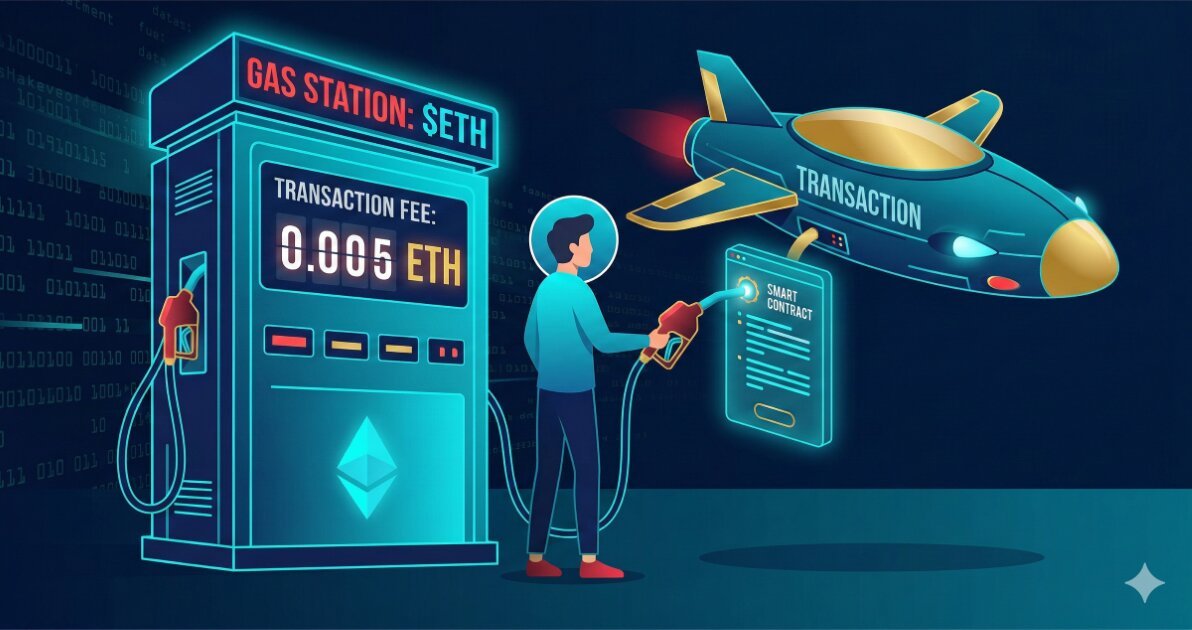
- Neglecting gas price dynamics on DEXs. Submitting a swap with low gas during network congestion leaves your transaction pending. Price may move against you before confirmation. Use dynamic gas estimators or set aggressive limits for time sensitive trades.
- Misunderstanding order book vs. AMM semantics. Limit orders on a DEX order book remain open until filled or canceled. AMM swaps execute immediately at the quoted rate (plus slippage). Strategies designed for one model do not transfer directly.
- Overlooking token approval front-running. Approving a DEX contract for unlimited spend exposes you if the contract has an exploit or upgrade vulnerability. Use exact approval amounts for one-off swaps, or revoke approvals after trading.
What to Verify Before You Rely on This
- Current proof of reserves or attestation status for any CEX holding your funds
- Withdrawal processing times and any active queue backlogs on the platform
- The legal entity and jurisdiction governing your exchange account
- Token support and network compatibility for deposits and withdrawals
- Fee schedules: maker/taker rates on CEXs, swap fees and gas on DEXs
- Smart contract audit history and bug bounty programs for DEX protocols
- Liquidity pool depth and recent volume for AMM pairs you plan to trade
- Jurisdictional product restrictions (leverage caps, token availability, derivative access)
- Cold storage ratios and insurance fund disclosures for CEXs
- Onchain contract addresses and official frontend URLs to avoid phishing
Next Steps
- Map your current exchange usage by custody model. Identify where you hold keys versus where the platform does.
- Test a small withdrawal from each CEX you use to measure actual processing time and verify destination address handling.
- For DEX activity, simulate swaps in a test environment or with minimal capital to measure gas costs and slippage under current network conditions before committing larger size.
Category: Crypto Exchanges