Evaluating and Acting on Crypto News: A Signal Extraction Framework

Crypto news flows constantly through feeds, Discord channels, and protocol forums. Most announcements carry little actionable signal. The practitioner’s task is to isolate structural changes that alter risk, liquidity, or execution conditions, then decide whether to adjust positions, tooling, or monitoring. This article covers how to filter crypto news for technical relevance, map announcements to protocol mechanics, and build response playbooks that avoid both panic trades and complacency.
What Constitutes Actionable News in Crypto
Actionable news changes the state space of a protocol, market, or regulatory constraint you depend on. This includes:
Protocol upgrades that modify execution paths. A DEX introduces concentrated liquidity tiers, changing slippage curves and the optimal routing for large swaps. A lending market adjusts collateral factors or liquidation thresholds, altering margin requirements.
Governance votes that reweight incentives. A DAO votes to redirect emissions from one pool to another, shifting APY and attracting mercenary capital. Token unlock schedules accelerate or delay, affecting supply pressure.
Infrastructure failures or security disclosures. Bridge exploits lock crosschain routes. Oracle downtime freezes price feeds. A dependency (subgraph, RPC provider, keeper network) becomes unreliable.
Regulatory actions that restrict access or custody paths. An exchange delists a token in certain jurisdictions. A privacy protocol faces enforcement, raising the cost of onchain mixing. New reporting requirements add friction to fiat offramps.
Non-actionable noise includes: price predictions, influencer sentiment, minor feature launches that do not affect core contracts, and restatements of already public data.
Mapping News to Protocol State Changes
When a headline arrives, trace it to the contract or off-chain component it affects. Ask what variable or constraint has changed.
Example: “Protocol X reduces liquidation threshold from 80% to 75%.” This tightens the health factor calculation. Positions previously safe may now require additional collateral or partial repayment. The action is to recompute your position’s health factor under the new threshold and decide whether to deleverage.
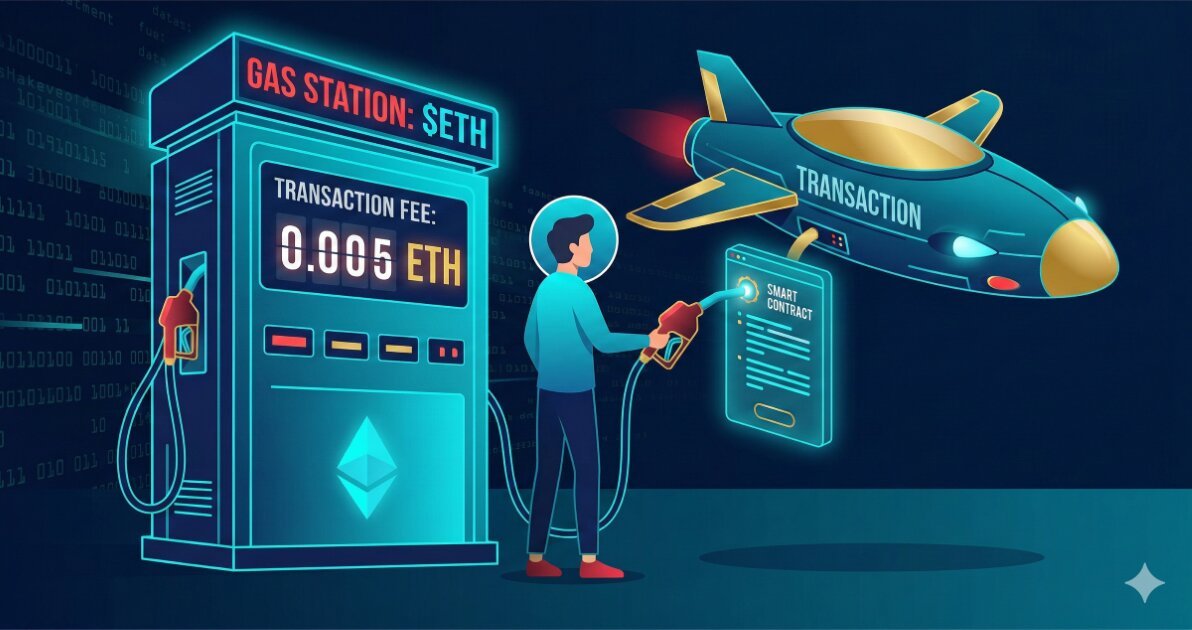
Example: “Chain Y experiences congestion, gas spikes to 500 gwei.” This raises the cost floor for arbitrage, widening DEX spreads. It may also delay keeper bot liquidations, temporarily increasing bad debt risk in lending markets. The action depends on exposure: if you rely on tight spreads for delta hedging, pause high frequency strategies until gas normalizes.
Example: “Governance proposes to sunset pool Z rewards in 30 days.” Emission-driven liquidity will exit. Pool depth will drop, slippage will widen, and impermanent loss may accelerate if the token pair depegs. The action is to evaluate whether the pool remains viable for your use case or if you should migrate liquidity before the exodus.
Building a News Filter and Response Playbook
Effective news consumption requires pre-filtering and decision trees.
Filter by dependency graph. Subscribe only to announcements from protocols, chains, and infrastructure you directly interact with. If you never use a particular bridge, its exploit does not require immediate action. Maintain a list of critical dependencies: oracles feeding your margin positions, RPCs serving your bots, governance forums for protocols where you provide liquidity.
Classify by urgency and reversibility. Some changes demand immediate action (security exploit in a vault you hold funds in). Others allow deliberate analysis (governance vote that executes in 72 hours). Irreversible events (token unlock) require preemptive positioning. Reversible changes (fee parameter tweaks) can be monitored and adjusted incrementally.
Pre-script responses for high impact scenarios. Define thresholds in advance. If a protocol’s TVL drops by more than 40% in 24 hours, exit liquidity positions. If gas exceeds a threshold for more than 6 hours, pause automated rebalancing. If an oracle deviates from index price by more than 2%, halt leveraged positions relying on that feed.
Worked Example: Acting on a Collateral Deprecation Announcement
A lending protocol announces that token ABC will be deprecated as collateral in 14 days due to low liquidity and oracle reliability concerns. You hold a position using ABC as collateral against a USDC borrow.
Immediate verification. Check the governance proposal for the exact deprecation timeline and any grace period for withdrawals. Confirm whether existing borrows remain active or must be closed. Review the contract code or docs to see if deprecation triggers an immediate liquidation or simply prevents new borrows.
Position assessment. Calculate your loan to value ratio. If you can repay the USDC borrow and withdraw ABC before deprecation, no liquidation risk exists. If you cannot source USDC at acceptable cost, evaluate swapping ABC for an accepted collateral type, accounting for slippage and gas.
Execution sequence. Repay a portion of the borrow to lower LTV, giving room for price fluctuation during the remaining days. Monitor ABC liquidity in DEX pools. If depth drops sharply as other users exit, accelerate the swap to avoid slippage spirals. Set a price alert for ABC in case it depegs, which would require immediate deleveraging.
Post-action monitoring. After exiting, watch whether the protocol actually executes the deprecation. Governance votes can be delayed or reversed. Subscribe to the protocol’s Discord or forum for updates.
Common Mistakes When Interpreting Crypto News
-
Confusing announcement timing with execution timing. A proposal to change a parameter may not take effect for weeks due to timelocks or multi-sig delays. Acting as if the change is immediate can waste gas or lock capital unnecessarily.
-
Ignoring second order effects. A bridge exploit may not affect your holdings directly but could drain liquidity from a chain you operate on, indirectly widening spreads or delaying withdrawals.
-
Overreacting to noise labeled as news. Partnership announcements, advisor additions, and testnet launches rarely change protocol state. Waiting for contract deployments or governance execution avoids premature repositioning.
-
Failing to verify sources. Fake announcements circulate on social media. Cross-check protocol Twitter accounts, official blogs, and onchain governance records before acting.
-
Assuming uniform impact across user types. A fee increase may be negligible for long term holders but prohibitive for high frequency traders. Tailor your response to your actual usage pattern.
-
Neglecting to check if you already have exposure. A vault you deposited into six months ago may have rotated strategies. News about its current dependency may require you to review allocations you assumed were static.
What to Verify Before Relying on a News Item
- The publication source and whether it links to onchain governance, contract addresses, or official protocol communications.
- The effective date or block height when the change activates, not just when it was announced.
- Whether the change applies to existing positions or only new ones (grandfathering clauses are common).
- The scope of impact: specific pools, tokens, or chains versus protocol wide changes.
- Whether the announcement has been confirmed by multiple independent sources or onchain evidence (transaction hashes, governance votes).
- The reversibility of the change. Can governance undo it, or is it a one way contract migration?
- Your actual exposure. Do you hold funds in the affected contract or depend on the affected infrastructure?
- Whether the news is a proposal, a vote outcome, or an executed transaction. Proposals fail regularly.
- Jurisdictional applicability. Regulatory news may affect only certain geographies.
- The version or deployment of the protocol you use. Multi-version protocols may roll out changes selectively.
Next Steps
- Audit your dependency graph. List every protocol, oracle, RPC, and bridge your strategies or holdings rely on. Subscribe to their governance forums and official channels.
- Define thresholds for automated alerts. Set monitoring for TVL drops, gas price spikes, oracle deviations, and governance votes affecting contracts you use.
- Test your response playbooks in a simulated environment. Practice exiting a position under congestion or swapping collateral types to ensure you understand gas costs and slippage dynamics before a real event forces action.
Category: Crypto News & Insights