DEX Exchange Architecture and Execution Mechanics for Crypto Trading
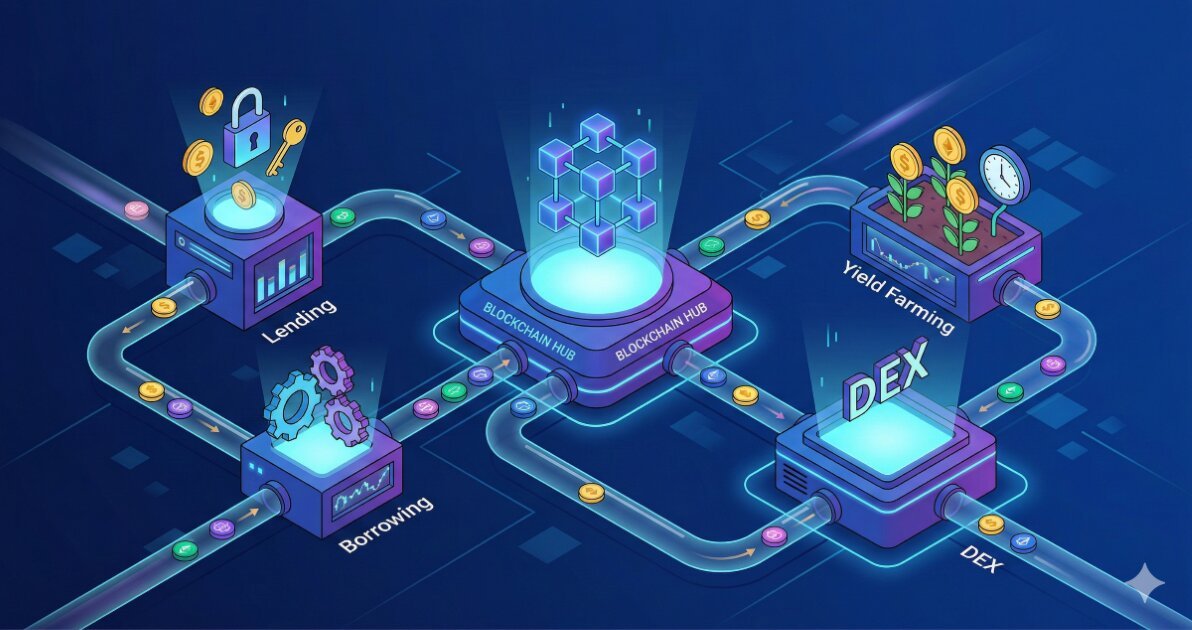
Decentralized exchanges handle spot trades using smart contracts instead of matching engines, order books, and custodial wallets. This architecture shifts liquidity provision, price discovery, and settlement guarantees onto onchain logic. Understanding how DEXs execute trades, route liquidity, and handle slippage matters when you need to predict execution costs, manage inventory positions, or integrate programmatic trading.
Order Routing and Liquidity Pool Selection
Most DEXs operate as automated market makers. Each trading pair lives in a separate liquidity pool governed by a constant function (typically x * y = k for Uniswap V2 style pools, or concentrated liquidity ranges for V3 variants). When you submit a swap, the contract calculates output quantity directly from the pool reserves and the bonding curve formula.
Aggregators like 1inch or Matcha query multiple DEX contracts, simulate execution across available pools, and split your order across routes that minimize price impact. The router contract bundles these atomic swaps into a single transaction. If any leg fails, the entire transaction reverts.
Key routing variables include:
- Pool depth: total value locked in the pair you are trading
- Pool fee tier: typically 0.01%, 0.05%, 0.3%, or 1%, which affects net price
- Active liquidity range: in concentrated liquidity models, only capital within the current price range contributes to the swap
- Intermediate hops: routing USDC to ETH might go USDC → WETH → ETH or USDC → DAI → WETH → ETH depending on depth and fees
Price Impact and Slippage Calculation
Price impact arises from moving along the bonding curve. For a constant product pool, swapping Δx of token X yields Δy of token Y according to:
(x + Δx) * (y + Δy) = k
Solving for Δy:
Δy = y * Δx / (x + Δx)
The effective price you pay differs from the spot price (y/x) because your trade changes the reserves. Larger trades relative to pool size produce exponentially worse execution.
Slippage tolerance is the maximum deviation you accept between the quoted output and actual output. If the pool state changes between transaction submission and block inclusion (frontrunning, backrunning, or organic volume), your output may differ. Setting slippage to 0.5% means the transaction reverts if you receive less than 99.5% of the quoted amount. Tight tolerances reduce sandwich attack profit but increase revert risk during volatile periods.
Gas Costs and Transaction Batching
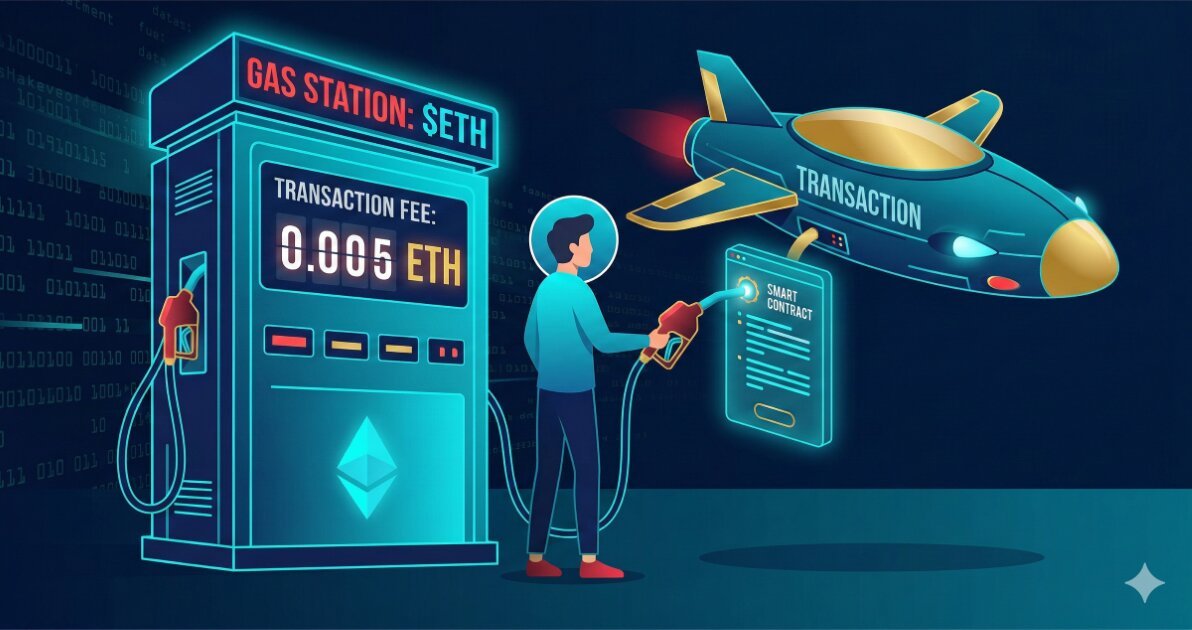
Every DEX interaction costs gas proportional to computational steps and storage writes. Typical costs:
- Simple swap on a single pool: 100k to 150k gas
- Multi hop route through three pools: 250k to 400k gas
- Providing liquidity (minting position): 150k to 300k gas
- Removing liquidity and claiming fees: 120k to 250k gas
Aggregators add overhead because the router contract loops through multiple pools. During network congestion, base fees spike. You can estimate total cost by multiplying gas units by (base fee + priority fee) and converting to USD via the native token price.
Batching matters for market makers and arbitrageurs. Instead of sending 20 separate swaps, bundle them into a single multicall transaction. This reduces total gas and guarantees atomic execution. If your strategy depends on correlated prices (triangular arb, for example), atomicity prevents partial fills that leave you exposed.
Worked Example: Triangular Arbitrage Execution
You identify a price discrepancy:
- Pool A: 1 ETH = 2000 USDC
- Pool B: 1 ETH = 0.5 WBTC
- Pool C: 1 WBTC = 4100 USDC
Expected profit per cycle: start with 2000 USDC, buy 1 ETH, swap to 0.5 WBTC, sell for 2050 USDC. Gross profit: 50 USDC.
Actual execution flow:
- Contract calls Pool A: swapExactTokensForTokens(2000 USDC) → receives ~0.995 ETH (accounting for 0.3% fee and price impact)
- Calls Pool B: swapExactTokensForTokens(0.995 ETH) → receives ~0.497 WBTC
- Calls Pool C: swapExactTokensForTokens(0.497 WBTC) → receives ~2035 USDC
Net result: 35 USDC before gas. If gas costs 0.003 ETH (~6 USDC at current prices), net profit drops to 29 USDC. If any leg slips below your minimum output, the transaction reverts and you pay gas with zero revenue.
This example illustrates why arbitrageurs optimize for:
- Gas efficiency (using Flashbots or direct validator communication to avoid mempool competition)
- Tight slippage bounds (revert early rather than accept poor fills)
- Pool selection (deeper pools reduce impact)
Oracle Dependency and Frontrunning Risk
DEXs do not consume external price feeds during execution. The pool’s internal reserves determine price. This creates two risks:
Stale liquidity: if a pool has not traded recently and external markets moved, the first trader pays to realign the pool with true price (or profits if they move first).
MEV extraction: searchers monitor the mempool for large swaps, insert transactions before and after yours to manipulate the pool state, and capture the spread. Sandwich attacks are profitable when your slippage tolerance exceeds the cost of moving the pool twice.
Mitigation strategies include:
- Using private transaction relays (Flashbots Protect, MEV Blocker) that hide your transaction from the public mempool
- Setting minimal slippage and accepting reverts
- Breaking large orders into smaller time weighted chunks
- Trading during high volume periods when your impact is smaller relative to organic flow
Common Mistakes and Misconfigurations
- Approving unlimited token spend: setting approval to uint256 max saves gas on future swaps but exposes your wallet to contract exploits. Some traders approve exact amounts per transaction.
- Ignoring pool fee tiers: routing through a 1% fee pool when a 0.3% pool exists for the same pair wastes capital. Aggregators usually optimize this, but manual traders sometimes miss it.
- Assuming output quotes are firm: quotes are estimates based on current state. Block time latency (12 seconds on Ethereum, faster on L2s) allows state changes before inclusion.
- Providing liquidity without modeling impermanent loss: LPs earn fees but suffer divergence loss when prices move. Calculating breakeven fee accumulation period requires historical volatility data and expected volume.
- Using stale router contracts: protocols upgrade logic and deprecate old contracts. Transactions to deprecated routers may revert or execute at worse prices if liquidity migrated.
- Failing to account for token transfer taxes: some tokens charge fees on transfer (reflection tokens, deflationary mechanisms). The DEX contract receives less than you sent, breaking swap calculations.
What to Verify Before Relying on DEX Execution
- Current liquidity depth for your trading pair on target protocols (check analytics dashboards like Dune or DefiLlama)
- Active fee tiers and liquidity concentration ranges (especially for Uniswap V3 style pools)
- Router contract addresses and version numbers in protocol documentation
- Gas price trends on your target chain (use block explorers or gas trackers)
- Token contract addresses to avoid fake pair scams (verify against official sources)
- Protocol audit reports and known vulnerabilities (recent exploits may indicate systemic risk)
- Transaction revert rates during your intended trading window (high revert rates signal MEV competition or volatility)
- Slippage tolerance defaults in your interface (some frontends set 2% or higher)
- Token approval status and amounts for the specific router you are using
- Whether the pool supports the token standard you hold (ERC20, wrapped native, rebasing tokens may behave unexpectedly)
Next Steps
- Simulate your trade using a fork of mainnet state (tools like Tenderly or Foundry) to inspect exact gas costs and output amounts before committing capital.
- Monitor multiple aggregators and compare routing efficiency for your typical trade sizes. Execution quality varies based on their liquidity integrations.
- Set up alerts for pool depth changes or new liquidity incentives that shift optimal routing. Liquidity migrates between protocols as yield opportunities change.