Evaluating Crypto Exchanges: A Framework for Selection and Risk Assessment
Choosing a crypto exchange requires balancing liquidity, custody model, fee structure, regulatory posture, and operational security. This article presents a decision framework for practitioners evaluating exchanges for trading, market making, or treasury operations. We focus on the mechanics that distinguish platforms and the failure modes that matter in practice.
Custody Model and Counterparty Risk
The fundamental divide is between custodial centralized exchanges (CEXs) and noncustodial decentralized exchanges (DEXs).
CEXs hold user assets in omnibus wallets or segregated accounts. You deposit tokens, the exchange credits an internal ledger, and trades settle instantly within that ledger. Withdrawals trigger onchain transactions from the exchange’s hot or cold wallets. This model introduces counterparty risk: insolvency, fraud, or regulatory seizure can block withdrawals regardless of your account balance. Exchange proof of reserves systems (Merkle tree attestations paired with wallet snapshots) offer partial transparency but do not reveal liabilities, off balance sheet positions, or the quality of collateral backing tokenized assets.
DEXs execute trades via smart contracts. Automated market makers like Uniswap hold liquidity in pools governed by bonding curves. Order book DEXs like dYdX post orders to onchain or offchain engines but settle via contracts. You retain custody until the swap executes atomically. The counterparty risk shifts from the exchange entity to smart contract exploits, oracle manipulation, and liquidity fragmentation.
For institutional flows, consider whether the exchange offers qualified custodian integrations, allowing you to trade without transferring legal ownership of assets to the platform.
Fee Structure and Execution Cost
Exchange fees typically combine maker/taker pricing, volume tiers, and token discounts. A typical CEX might charge 0.10% taker and 0.05% maker at baseline, scaling down to 0.02% / 0.00% for monthly volumes above a threshold (often in the tens of millions USD equivalent). Some platforms offer negative maker fees (rebates) to incentivize liquidity provision.
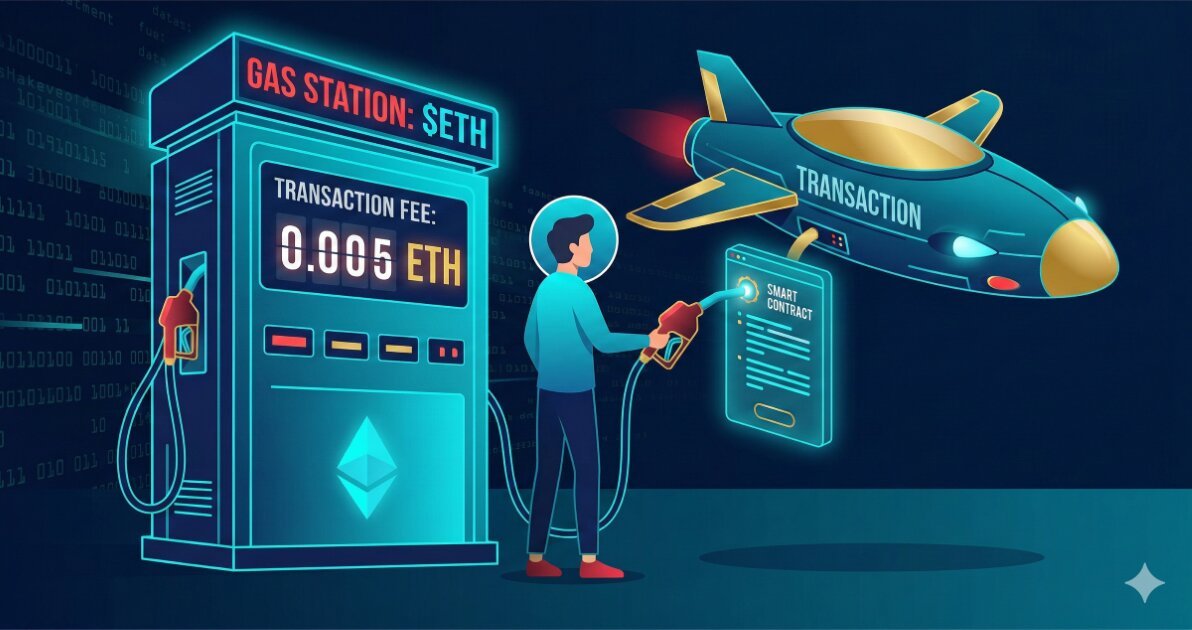
DEX fees differ structurally. Uniswap V3 charges a pool specific fee (0.05%, 0.30%, or 1.00% for most pairs) split among liquidity providers. You pay this on every swap. Gas fees add a variable cost: simple swaps might cost 100,000 to 200,000 gas, translating to $3 to $50+ depending on network congestion and token approvals required. For high frequency or small ticket trades, gas dominates total cost.
Calculate effective cost as: spread + fee + (gas_cost / trade_size). On CEXs, spread tightness correlates with order book depth. On AMMs, price impact follows Δy = y × (1 - (x / (x + Δx))) for constant product pools, where x and y represent pool reserves. Large trades relative to pool size incur nonlinear slippage.
Liquidity Depth and Market Structure
Order book depth determines slippage for size. Evaluate by sampling bid/ask spreads at multiple depths: 0.1%, 0.5%, 1.0%, and 2.0% from mid. A deep book maintains tight spreads beyond the top of book. For BTC/USD, tier one CEXs typically show sub 0.02% spreads for $100k notional, widening to 0.10% or more at $10M on thinner pairs.
AMM liquidity concentrates around current price in V3 style pools with range orders. Total value locked (TVL) is a crude proxy. More relevant: liquidity density in your expected price range. A $50M pool with 80% concentrated ±2% provides better execution than a $100M pool spread uniformly.
Check whether the exchange supports limit orders, stop losses, iceberg orders, and algorithmic execution types. Market makers need API rate limits that accommodate high message throughput (10+ messages per second for quote updates).
Regulatory Jurisdiction and Asset Coverage
Exchanges operate under varying regulatory frameworks. US licensed platforms typically restrict asset listings to tokens passing internal securities analysis, exclude margin/derivatives for retail users, and implement travel rule compliance for withdrawals. Offshore platforms list hundreds of tokens, offer perpetual futures with high leverage, and apply lighter KYC.
Regulatory exposure affects:
- Freeze risk: Court orders or agency actions can halt specific withdrawals or freeze accounts.
- Delistings: Tokens deemed securities may be removed, forcing liquidation or transfers within narrow windows.
- Tax reporting: US exchanges file 1099 forms; others may not.
If you trade tokens unavailable on compliant venues, verify withdrawal policies. Some platforms impose whitelist only withdrawals or multi day holds on new addresses.
Security Posture and Historical Incidents
Review the platform’s security track record and architecture:
- Cold storage ratio: What percentage of user assets remain in offline wallets? Leading CEXs keep 90%+ cold.
- Insurance funds: Some exchanges maintain reserve funds to cover losses from platform errors (not user account compromises). Verify fund size and triggering conditions.
- Withdrawal controls: Mandatory delays, address whitelisting, multi signature requirements for large amounts.
- Incident history: Past hacks, the recovery process, and whether users were made whole.
For DEXs, audit history matters more than brand. Check whether contracts have been audited by reputable firms (Trail of Bits, OpenZeppelin, Consensys Diligence) and whether bug bounty programs exist. Note that audits do not guarantee safety. Read the audit report for acknowledged risks and scope limitations.
Worked Example: Routing a $500k USDC to ETH Trade
You need to convert $500k USDC to ETH. Compare execution paths:
Option A: Tier one CEX
Order book shows 250 ETH bid within 0.05% of mid (~$2,000/ETH assumed for illustration). You place a limit order at mid. Maker fee: 0.05%. Fill occurs over 10 minutes as market moves through your level. Total cost: $250 in fees, negligible slippage if limit fills, but you bear timing risk if price moves away.
Option B: Uniswap V3 ETH/USDC 0.05% pool
Pool holds $80M liquidity concentrated ±5% around spot. Input $500k into the constant product simulator: price impact approximately 0.07%, plus 0.05% fee, plus ~$30 gas. Total cost: ~$600 plus impact. Execution instant, no timing risk, but you pay the impact upfront.
Option C: DEX aggregator (1inch, CoW Swap)
Routes through multiple pools and potentially a solver network. Might split $300k via Uniswap, $200k via Curve, achieving 0.04% average impact. Gas rises to ~$80 for complex routing. Total cost: ~$500. Execution instant.
If minimizing cost is primary, the CEX limit order wins if you tolerate execution uncertainty. If certainty and speed matter, the aggregator offers competitive pricing with atomic settlement.
Common Mistakes and Misconfigurations
- Ignoring withdrawal fees and minimums: Some platforms charge fixed withdrawal fees (e.g., 0.0005 BTC regardless of amount) that dominate cost for small transfers. Others impose minimums that lock dust balances.
- Assuming API keys inherit account permissions: CEX APIs often require explicit permission grants per endpoint. A key with trade permission may lack withdrawal rights, breaking automated treasury flows.
- Neglecting token contract addresses on DEXs: Multiple tokens share tickers (WBTC vs. wrapped BTC variants). Verify the contract address matches the intended asset. Trading the wrong token is irreversible.
- Overlooking AMM pool versions: Uniswap V2 and V3 pools for the same pair have different liquidity and fee structures. Aggregators should route optimally, but direct integrations need explicit pool selection.
- Underestimating gas cost variance: DEX trades during network congestion can see gas prices spike 10x. Set gas limits and consider timing trades to low congestion windows.
- Relying on displayed balance during high volatility: CEX balances reflect internal ledger state, which may lag onchain settlement during outages or heavy load. Withdrawals may queue or fail if the platform’s actual reserves are temporarily misallocated.
What to Verify Before Relying on This Exchange
- Current fee schedule and volume tier thresholds (often updated quarterly).
- Supported deposit and withdrawal methods for your jurisdiction (wire, stablecoin rails, onramp partners).
- Token listing status for your required assets (exchanges delist with limited notice).
- API rate limits and historical uptime during volatile periods (check status page archives).
- Margin and leverage policies if using derivatives (margin requirements, liquidation engines, funding rate caps).
- Jurisdictional restrictions for your entity type (individual vs. corporate accounts, accredited investor gates).
- Current proof of reserves publication cadence and methodology (if available).
- Insurance or SAFU fund details: coverage limits, claim process, exclusions.
- Withdrawal processing times and any holding periods for newly deposited funds.
- Whether the platform has announced upcoming migrations (chain upgrades, custody changes, regulatory shifts).
Next Steps
- Benchmark execution quality: Run identical test trades across 2 to 3 candidate exchanges using limit orders and market orders. Measure fill price, latency, and partial fill behavior.
- Model cost across realistic scenarios: Build a spreadsheet capturing fees, spreads, gas, and expected slippage for your typical trade sizes and pairs. Include withdrawal costs if you move assets frequently.
- Set up monitoring and fallback routes: No single exchange offers perfect uptime. Configure API integrations to detect outages and route orders to a backup venue automatically during downtime.
Category: Crypto Exchanges