Understanding Crypto Exchange Fee Structures and Their Impact on Trade Execution

Crypto exchange fees directly affect net returns on every trade, yet their structure varies widely across platforms and execution paths. Centralized exchanges typically charge a combination of maker/taker fees, withdrawal fees, and sometimes deposit fees, while decentralized protocols impose swap fees, network gas costs, and occasionally protocol taxes. This article breaks down the mechanics of these fee structures, how they compound across trade types, and where traders commonly miscalculate total execution costs.
Maker/Taker Fee Models on Centralized Exchanges
Most centralized exchanges apply differential pricing based on whether your order adds or removes liquidity from the order book. A maker order rests in the book (limit order not immediately matched), while a taker order executes against existing liquidity (market order or aggressive limit).
Maker fees typically range from 0.00% to 0.10%, with many exchanges offering maker rebates (negative fees) for high volume accounts. Taker fees commonly fall between 0.02% and 0.15%. The spread between maker and taker rates creates an incentive to provide liquidity rather than consume it.
Exchanges calculate fees on the notional value of the trade, not the profit. A $100,000 trade at 0.10% incurs $100 in fees regardless of whether the position gains or loses. Volume tiers adjust these base rates. Traders crossing specific 30 day rolling volume thresholds (often measured in millions or tens of millions USD equivalent) move into lower fee brackets. Some platforms further discount fees when paid in their native token.
Withdrawal and Deposit Fee Mechanics
Withdrawal fees compensate the exchange for onchain transaction costs and operational overhead. These are usually fixed per asset rather than proportional to withdrawal size. Withdrawing 0.1 BTC and 10 BTC may incur the same absolute fee, making small withdrawals proportionally expensive.
Exchanges set withdrawal fees at their discretion, often significantly above actual network costs. During periods of high network congestion, some platforms update fee schedules, though not always in real time. Others absorb volatility in gas prices and adjust quarterly or when conditions become extreme.
Deposit fees are less common on major exchanges but appear on some platforms for specific assets or payment methods. Fiat deposits via wire transfer or credit card frequently carry either flat fees or percentage based charges.
DEX Swap Fees and Liquidity Provider Revenue
Decentralized exchanges charge swap fees that accrue to liquidity providers rather than a central operator. Uniswap V2 charges 0.30% per swap, with 100% going to LPs. Uniswap V3 introduced multiple fee tiers (0.01%, 0.05%, 0.30%, 1.00%), allowing pools to match fee levels to asset volatility and competition.
The swap fee appears simple but interacts with slippage in ways that amplify total costs. A 0.30% fee on a trade that moves the price 0.50% against you results in 0.80% total cost relative to the pre trade midpoint. Traders often focus on slippage tolerance settings while underweighting the fixed percentage fee.
Aggregators like 1inch and Cowswap route trades across multiple pools to minimize combined fees and slippage. They may split a single trade into portions executed on different DEXes, each with distinct fee structures. The aggregator itself may charge an additional protocol fee or earn revenue through positive slippage capture.
Gas Costs as Variable Execution Fees
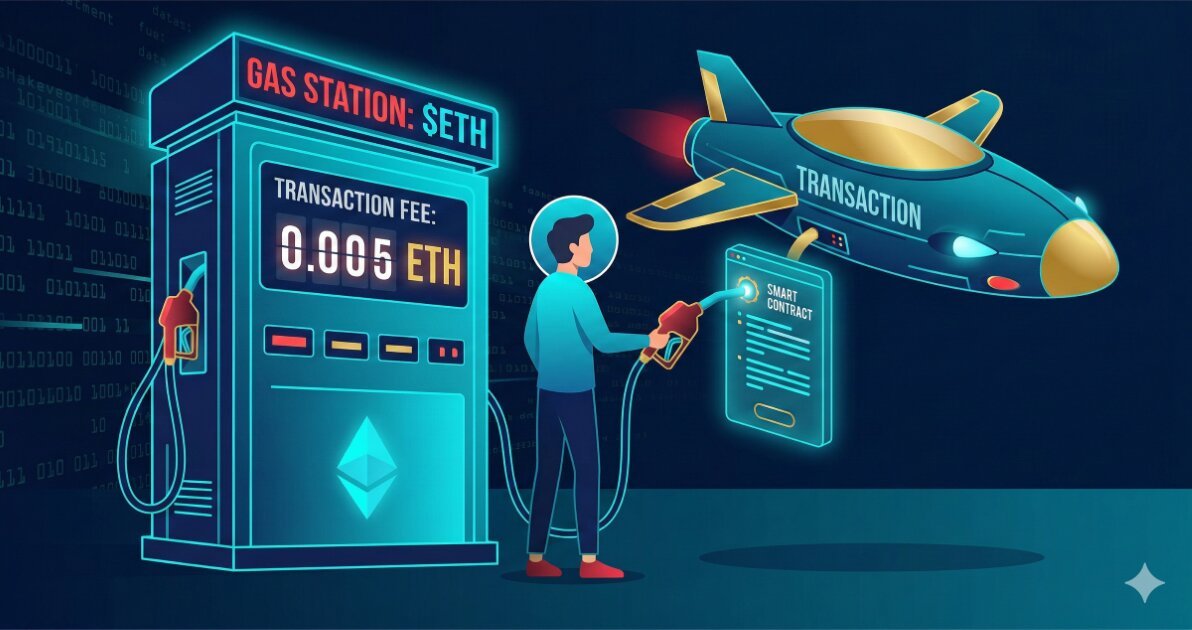
Every onchain interaction incurs gas fees paid to network validators. For DEX trades, gas costs vary by protocol complexity. A simple Uniswap V2 swap might consume 150,000 gas, while a multi hop aggregated trade could exceed 500,000 gas.
Gas prices fluctuate based on network demand. At 30 gwei, a 150,000 gas swap costs 0.0045 ETH (150,000 × 30). At 150 gwei, the same swap costs 0.0225 ETH. Converting to USD equivalent, this represents anywhere from a few dollars to over $50 depending on ETH price and network conditions.
For small trades, gas costs can dwarf percentage based fees. A $500 swap with a $30 gas cost represents a 6% total fee before accounting for the swap fee itself. This creates a practical minimum trade size for onchain execution, particularly on Ethereum mainnet. Layer 2 networks reduce gas costs by one to two orders of magnitude, making smaller trades economically viable.
Worked Example: Total Cost Comparison
Compare the all in cost of a $10,000 ETH to USDC trade across three execution paths.
Centralized exchange (taker order):
– Trade fee: $10,000 × 0.08% = $8
– Withdrawal fee (moving USDC offchain): $25 fixed
– Total: $33 (0.33%)
Uniswap V3 on Ethereum mainnet:
– Swap fee: $10,000 × 0.05% = $5
– Gas cost: 180,000 gas × 50 gwei × $3,000/ETH = $27
– Slippage: $10,000 × 0.15% = $15
– Total: $47 (0.47%)
Uniswap V3 on Arbitrum (L2):
– Swap fee: $10,000 × 0.05% = $5
– Gas cost: 180,000 gas × 0.1 gwei × $3,000/ETH = $0.054
– Slippage: $10,000 × 0.15% = $15
– Total: $20.05 (0.20%)
The L2 route offers the lowest total cost for this trade size. For a $100,000 trade, the centralized exchange becomes competitive as fixed withdrawal fees represent a smaller percentage. For a $500 trade, all three paths become expensive on a percentage basis, with mainnet Ethereum particularly prohibitive.
Common Mistakes and Misconfigurations
Ignoring withdrawal costs in total fee calculation. Traders compare trading fees across platforms without accounting for the cost of moving assets offchain. A platform with 0.05% trading fees but $50 withdrawal fees is more expensive than one with 0.15% fees and $10 withdrawals for trade sizes under $10,000.
Setting excessive slippage tolerance to ensure execution. A 2% slippage setting doesn’t guarantee you pay 2%. It guarantees you won’t pay more than 2%, but MEV bots and sandwich attacks often extract the full tolerance. Tighter bounds force either execution near market price or trade rejection.
Misunderstanding volume tier calculation periods. Most exchanges use 30 day trailing volume, not calendar month. Crossing a threshold on day 15 provides benefits that begin eroding on day 16 of the following month as old volume ages out. Consistent volume maintenance requires planning, not one time spikes.
Overlooking maker/taker classification on limit orders. A limit order set at or above the best ask (for a buy) executes immediately as a taker. Only limit orders priced to wait in the book qualify for maker fees. Misplaced limits incur higher costs without providing intended execution control.
Treating all DEX pools as equivalent for the same pair. Different Uniswap V3 fee tiers for ETH/USDC have different liquidity depths. The 0.05% pool may have deeper liquidity than the 0.01% pool, resulting in lower total costs despite higher fees. Always check effective liquidity, not just fee percentages.
Assuming gas costs scale linearly with trade size. Gas consumption depends on computational complexity, not trade value. A $1,000 swap and a $1,000,000 swap through the same pool consume nearly identical gas. Large trades benefit from fixed gas costs spread over larger notional, while small trades suffer disproportionately.
What to Verify Before You Rely on This
- Current fee schedules on your primary exchange, including any recent updates to maker/taker rates or volume tiers
- Withdrawal fee amounts for each asset you trade, checking whether fees are fixed or proportional
- Your current 30 day trailing volume and proximity to the next fee tier threshold
- Whether the exchange offers fee discounts for native token payment and the effective discount rate after token volatility
- Active fee tier and liquidity depth for specific DEX pools you plan to use
- Current gas prices on target networks and typical gas consumption for your trade type (check recent similar transactions)
- Whether your aggregator charges protocol fees on top of underlying DEX fees
- Minimum withdrawal amounts that might force you to maintain larger exchange balances than intended
- Any promotional fee rates with expiration dates or volume caps
- Regulatory or jurisdictional restrictions that might limit your access to specific fee tiers
Next Steps
- Build a spreadsheet model that calculates total execution cost (trading fees, withdrawal fees, gas, slippage) across your regular trade sizes on each platform you use. Update it monthly.
- Review your past 90 days of trades to identify whether maker fee qualification or volume tier optimization could reduce costs, then adjust order placement strategy accordingly.
- Test small trades on L2 networks if you currently execute exclusively on centralized exchanges or Ethereum mainnet, measuring actual total costs against your model predictions.
Category: Crypto Exchanges